

Whether you have banks of cell lines stored in liquid nitrogen or assay reagents constantly consumed, managing your inventory is necessary to keep your lab running smoothly. That means having processes and workflows in place to guarantee the lab is working at peak efficiency, as well as having the proper material and infrastructure to track and manage your assets. Below, we’ll discuss some of the ways you can efficiently manage your inventory and keep track of everything in your lab.

Gene expression microarrays generate extremely high amounts of transcriptomic data. These datasets may account for thousands of genes from hundreds of different individuals and can be used to identify genes associated with a particular disease or to assess gene expression profiles in response to a given therapy. Transcriptomic datasets are usually uploaded to a larger database, such as Gene Expression Omnibus (GEO), where others can review the data and draw their own conclusions. In effect, these datasets don’t just shape the hypothesis of the paper from which it was published; they influence all other scientists using those datasets to guide their own research.

Histology, the study of the anatomy of cells and tissues, is an important field of research used by researchers and physicians. While researchers seek to understand how each individual cell affects the function of tissues and organs, physicians study the histopathology of tissues, to see how they change in those affected by disease. Proper labeling of tissue samples at each step of the tissue preparation process is critical to the interpretation of histopathologic results, which are relied upon to correctly diagnose patients. However, histological techniques present unique obstacles for proper labeling that will often require innovative identification solutions to overcome.
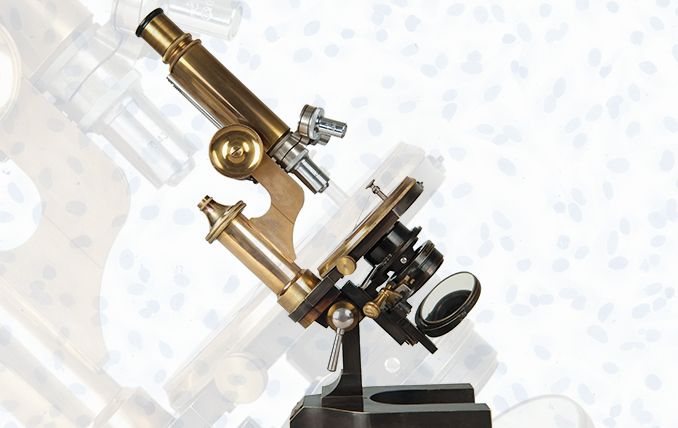
Histology is one of the most varied fields of research, with a host of practical applications. Scientists have used the histological staining of tissues to understand how our bodies work, to discover novel therapeutic targets for disease, and to help diagnose patients suffering from illness. The term histology was coined in 1819 by Karl Mayer, who combined the two Greek words histos (tissues) and logos (study).1 However, the origins of histology date back even further with the advent of microscopy and the initial investigations into how tissues and organs work inside the body.

Artificial intelligence (AI) has been a popular topic ever since it was introduced in 1956 by John McCarthy. It quickly captured the imagination of Hollywood, leading to many blockbuster movies being made using AI as a plot device, including the Terminator franchise. However, until now AI has remained as only science fiction, as it’s only recently that computers have become powerful enough to integrate AI into something appreciably functional, allowing some of the top companies in the world, such as Google, IBM, and Apple, to design systems that learn on their own. Gartner, a research and advisory company who publishes a yearly list of the most hyped technologies (termed the Gartner Hype Cycle), has placed AI-associated technologies at the top of their list.1 With companies like PathAI, Freenome, and Benevolent AI all entering the market, it hasn’t taken long for scientists to adapt AI to solving complex biological and medical problems as well.

A crowd-sourced, entirely cloud-based challenge, with the aim of developing and assessing new algorithms capable of identifying and correcting mislabeled samples using multi-omics data.

The week of Black Friday is one of the few days of the year when you'll see people standing in lines that wrap-around the block just to buy a toaster. For those in the United States, just preparing and hosting Thanksgiving dinner can often be overwhelming. Many also venture out to shop the next day, Black Friday, and throughout the week as companies ratchet up their sales and aim to boost their profits. The name originated from the fact that the Friday after thanksgiving was the day retailer's accounts went from "in the red" (loss), to "in the black" (profit). The modern concept of Black Friday began in the 1950s to signal the start of holiday shopping season. It’s become a national phenomenon, with people crowding stores and consumers behaving in extreme ways. You would think people would prefer to shop with a bit more room to maneuver, but there’s some strong psychological factors at play, all working to drive consumers to buy more and more. Let's dive into the top 6 reasons.

Canada has recently passed new legislation legalizing cannabis throughout the country. Lineups at government-regulated stores were seen all over the country, with people eagerly awaiting legally sold marijuana for the first time ever in Canada. The demand is high, with many shops around Canada quickly selling out of many popular products on day 1. As the market is set to explode, the Canadian government has begun to invest heavily towards cannabis research, with the Canadian Institutes of Health Research funding around $20 million worth of projects within the last 5 years and ready to dole out another $3 million in the next few months.
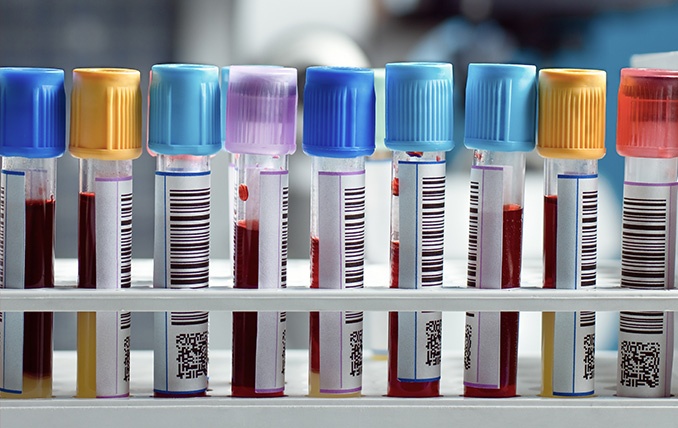
Studying the real-time effects of labeling errors in the lab is extremely difficult. Billions of patient specimens, including blood and urine samples, as well as biopsies taken from multiple tissues and organs, are continually processed on a daily basis in clinical labs. Fortunately, several large-scale studies throughout the last 20 years have attempted to shed light on the clinical consequences of labeling errors in an effort to improve patient care and reduce healthcare costs worldwide.
CRISPR/Cas9, originally discovered in 1987 by a team of Japanese scientists and later refined by Jennifer Doudna in 2012, is a gene-editing tool that can cut and paste any genomic sequence, either in vitro or in vivo. It’s a system that relies on clustered regularly interspaced short palindromic repeats (CRISPR) to recognize foreign DNA and is mainly used in bacteria to fight off viral infection. This tool has garnered a lot of attention recently as researchers have tailored CRISPR/Cas9 to edit animal genomes in ways that were previously impossible or inefficient, revolutionizing genetic and biomedical research. CRISPR/Cas9 has become a crucial resource for labs who require stable cell lines or mice with knockouts, knock-ins, or gene mutations, able to drive constitutive gene activation or to edit micro-RNA and long-noncoding RNA.