

Syringes are one of the most integral tools of any medical institution. Primarily used for injectable medications, they are critical to proper patient care, as anesthesiologists depend on them to sedate and anesthetize. With that in mind, it’s important to consider that syringes, which may hold any number of different classes of drugs, need to be properly labeled with pertinent information, such as the name of the drug and its concentration, as mislabeled syringes could yield potentially dire consequences for those who are injected with the wrong substance or dose.

Errors occur every day in healthcare institutions and research facilities. Medical lab errors can be very costly, setting hospitals back hundreds (sometimes thousands) of dollars for every mislabeled sample, causing irreparable harm to the physical and mental health of the patient. Errors in research also have a broad impact, skewing results and wasting precious materials—which are often irreplaceable—and years of effort.

So, you’ve decided to purchase a set of labels and a label printer, but you haven’t figured out which software you should install to design your labels with. There are several different options, from basic software that comes with the printer to specialized software, such as BarTender™ and Label Matrix™, each of which can be used on their own or as part of a laboratory information management system (LIMS). Here, we’ll review some of the pros and cons of each option.

Gene expression microarrays generate extremely high amounts of transcriptomic data. These datasets may account for thousands of genes from hundreds of different individuals and can be used to identify genes associated with a particular disease or to assess gene expression profiles in response to a given therapy. Transcriptomic datasets are usually uploaded to a larger database, such as Gene Expression Omnibus (GEO), where others can review the data and draw their own conclusions. In effect, these datasets don’t just shape the hypothesis of the paper from which it was published; they influence all other scientists using those datasets to guide their own research.

Histology, the study of the anatomy of cells and tissues, is an important field of research used by researchers and physicians. While researchers seek to understand how each individual cell affects the function of tissues and organs, physicians study the histopathology of tissues, to see how they change in those affected by disease. Proper labeling of tissue samples at each step of the tissue preparation process is critical to the interpretation of histopathologic results, which are relied upon to correctly diagnose patients. However, histological techniques present unique obstacles for proper labeling that will often require innovative identification solutions to overcome.
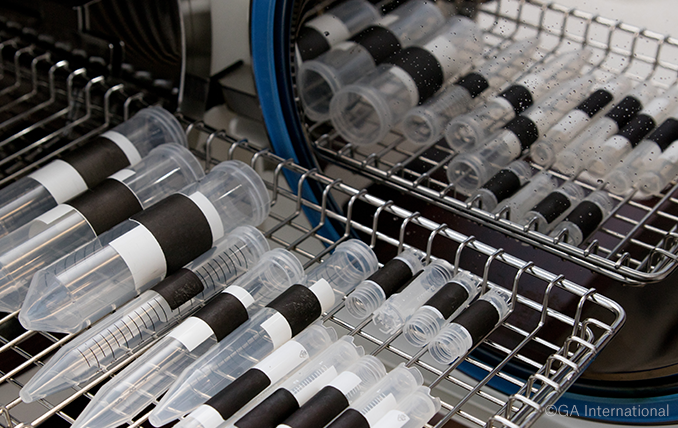
In both clinical and research labs, it is often necessary to label material or equipment with sensitive information. This can include patient information or confidential experimental data. Once the patient is discharged, or the samples are either processed or no longer needed, these labels must be discarded; however, the information on the labels must still remain private. In certain cases, this may prove to be more difficult than anticipated. Here are 3 unique label options to help ensure that discarded material can’t be used to procure sensitive information.

Most of us are familiar with the mainstream image of Santa Claus, with his reindeer, sleigh, and a country full of elves that love nothing more than to make presents for children. However, Saint Nicholas was not always the goofy bearded man we picture today, having gone through many facelifts since his humbler beginnings in the 4th century, a time when Saint Nicholas, otherwise known as Nicholas of Bari or Nicholas of Myra, lived.

Histology is one of the most varied fields of research, with a host of practical applications. Scientists have used the histological staining of tissues to understand how our bodies work, to discover novel therapeutic targets for disease, and to help diagnose patients suffering from illness. The term histology was coined in 1819 by Karl Mayer, who combined the two Greek words histos (tissues) and logos (study).1 However, the origins of histology date back even further with the advent of microscopy and the initial investigations into how tissues and organs work inside the body.

Artificial intelligence (AI) has been a popular topic ever since it was introduced in 1956 by John McCarthy. It quickly captured the imagination of Hollywood, leading to many blockbuster movies being made using AI as a plot device, including the Terminator franchise. However, until now AI has remained as only science fiction, as it’s only recently that computers have become powerful enough to integrate AI into something appreciably functional, allowing some of the top companies in the world, such as Google, IBM, and Apple, to design systems that learn on their own. Gartner, a research and advisory company who publishes a yearly list of the most hyped technologies (termed the Gartner Hype Cycle), has placed AI-associated technologies at the top of their list.1 With companies like PathAI, Freenome, and Benevolent AI all entering the market, it hasn’t taken long for scientists to adapt AI to solving complex biological and medical problems as well.

With medicinal as well as recreational cannabis being
legalized across North America in recent years, the industry has seen tremendous growth. However, while this has led to impressive profits for cannabis producers and distributors, it has also brought with it a host of new regulations and standards. This includes strict regulations on the identification of all plants and cannabis products at every stage of production and distribution.
Read More